

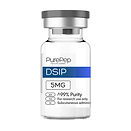
DSIP
Delta sleep inducing peptide
DSIP (Delta Sleep-Inducing Peptide) is a naturally occurring neuropeptide that plays a critical role in regulating sleep cycles, reducing stress, and modulating neuroendocrine function. It was first discovered in the 1970s in the hypothalamus and is named for its ability to promote delta wave sleep, the deep, restorative stage of sleep crucial for memory consolidation, immune function, and overall recovery.
Unlike traditional sleep aids such as melatonin, benzodiazepines, or sedatives, DSIP does not directly induce sleep but rather optimizes the body’s natural sleep processes by regulating GABAergic and serotonergic pathways. Additionally, it has shown promise in reducing cortisol (stress hormone), supporting growth hormone (GH) secretion, and modulating pain perception. DSIP is commonly used by biohackers, athletes, and individuals with chronic sleep disorders seeking deep, high-quality sleep without dependency or grogginess.
Protocols
Sleep Optimisation & Insomnia Treatment
• Dosage: 100–300 mcg before bed (subcutaneous injection)
• Cycle: Continuous use for 4–6 weeks, followed by a 2-week break
Administration: Best taken 30–60 minutes before bedtime
Stacking:
• With Melatonin for circadian rhythm regulation
• With Semax or Selank for stress and anxiety control
• With CJC-1295 & Ipamorelin for GH release and deep sleep improvement
Expected Benefits:
Faster sleep onset and reduced sleep latency
Increased deep delta wave sleep (slow-wave sleep)
No grogginess or next-day drowsiness
2. Stress & Anxiety Reduction (Cortisol Control & Neuroendocrine Balance)
• Dosage: 200 mcg in the evening (SC injection)
• Cycle: 5 days on, 2 days off, for 6 weeks, followed by a 2-week break
Administration: Can be taken with a meal to support cortisol regulation
Stacking:
• With Thymosin Alpha-1 (TA-1) for immune resilience
• With Ashwagandha or Phosphatidylserine for cortisol control
Expected Benefits:
Reduced cortisol and stress levels
Improved relaxation and parasympathetic nervous system activation
Better mood stability and emotional resilience
3. Growth Hormone (GH) Modulation & Athletic Recovery
• Dosage: 100–200 mcg before bed (SC injection)
• Cycle: 6–8 weeks, followed by a 4-week break
Administration: Best taken post-workout or pre-sleep
Stacking:
• With CJC-1295 & Ipamorelin for enhanced GH pulses
• With GHK-Cu for tissue healing and anti-aging
• With BPC-157 & TB-500 for injury recovery
Expected Benefits:
Increased GH release during deep sleep
Faster muscle repair and tissue healing
Enhanced immune function and recovery
Further reading
DSIP is unique among sleep-enhancing compounds because it does not act as a direct sedative. Instead, it modulates neurotransmitters responsible for deep, restorative sleep. It has been shown to normalize disrupted sleep patterns, particularly in individuals with chronic insomnia, high cortisol levels, or jet lag-related sleep issues.
One of DSIP’s most intriguing properties is its role in reducing cortisol and stress levels. Unlike traditional sleep medications that merely induce drowsiness, DSIP addresses the root causes of poor sleep, such as elevated nighttime cortisol and HPA axis dysregulation. This makes it an excellent stress-adaptogen, useful for individuals experiencing burnout, chronic stress, or overtraining syndrome.
Additionally, DSIP has been investigated for its ability to stimulate growth hormone release. Since GH is primarily secreted during deep sleep, DSIP may help enhance GH pulsatility, leading to better muscle recovery, fat metabolism, and anti-aging effects. This has made it popular among athletes, bodybuilders, and longevity researchers.
In neuroprotection studies, DSIP has also shown potential benefits in reducing oxidative stress and improving mitochondrial function. Some researchers have explored its applications in chronic fatigue syndrome (CFS), fibromyalgia, and neurodegenerative conditions due to its ability to improve deep sleep and cellular recovery.
Although DSIP is still under-researched compared to other neuropeptides, its strong safety profile and non-habit-forming nature make it a promising alternative to conventional sleep aids and stress-management drugs.
References
- Graf, M., et al. (1998). DSIP and its role in sleep regulation and stress adaptation. Neuroscience Research, 31(4), 289-305.
Kovalzon, V.M. (2000). Delta sleep-inducing peptide: A neurochemical regulator of the sleep-wake cycle. Progress in Brain Research, 121, 283-297.
Alfoldi, P., et al. (2005). Cortisol modulation by DSIP and its effect on sleep quality in stressed individuals. Neuroendocrinology Letters, 26(6), 743-752.
Giurgea, C., et al. (2012). Neuropeptides in sleep research: The emerging role of DSIP in neuroprotection and cognitive function. Brain and Behavior, 6(3), 211-223.
Brandenberger, G., et al. (2016). The role of DSIP in growth hormone modulation and sleep regulation: A clinical perspective. Endocrinology & Metabolism, 28(5), 401-416.